Your Call Is Not Confirmed Yet
What You're About to Read Will Make You Want to
"Burn Down Your Business"
What You're About to Read Will Make You Want to
"Burn Down Your Business"
What You're About to Read Will Make You Want to
"Burn Down Your Business"

This will be YOUR most valuable 13-min read in 2026.
Right. Before anything else. Fifteen minutes. And I'll tell you exactly how they're spent so you're not sitting there wondering when this thing ends. First few minutes: why you're stuck. Not the version an agency gives you when they want a retainer. The real one. The rest: three businesses we took apart and rebuilt. Dashboards attached, numbers on the screen. Jordan, $50k a month to $1M collected in 60 days, on an offer that didn't exist the day we met him. Our ecom client, $200k to $1.25M a month. Shohaib, $10k months to $40k days, and we never touched paid once. (That last one still bothers me a little. Best turnaround we've had and there's no ad account to point at.) Then two private videos land in your inbox. First within 12 hours. Second within 24.
This will be YOUR most valuable 13-min read in 2026.
I know how that sounds. Stay with me. By the end of this page you'll see exactly why you're stuck between $80k and $250k a month, and what the shift to $1M/month actually requires. Not the version agencies pitch you. The real one. I'm going to show you how Jordan collected $1M in 60 days from a completely new offer. How our eCommerce client went from $200k to $1.25M/mo in 90 days. And why both of them had to kill parts of their business before they could scale. Plus two private videos I've never released publicly. First one lands in your inbox within 12 hours. Second within 24. Free.
But before you scroll, three things. Now, not in a minute, because "in a minute" is where calendar invites go to die:
Add this call to your calendar. If the invite doesn't show up, check spam and confirm the sender. If it's not on your calendar, it doesn't exist.
Watch both videos when they arrive.
Clear 30-45 minutes for the call. No distractions. This matters more than you think.
Alright. Let's talk about why everything you're currently doing won't get you past $250k.
Why You're Actually Stuck
Hint: We're Going to Break Your Business
You're probably doing everything "right"
Running ads. Testing hooks. Optimizing funnels. Hired an agency. Then a second one. Maybe a third, let's be honest, we've all got that Slack channel we stopped opening. And you're still somewhere between $80k and $250k a month. Same as last quarter. Roughly the same as the one before it. Here's what nobody around you will say out loud, mostly because they're being paid not to. The things that got you here are exactly what's keeping you here. You don't have a tactics problem. You have an infrastructure problem. You're polishing the 80% that doesn't matter while the 20% running your entire ceiling sits one screen deep, doing its thing quietly, month after month. And nothing on your dashboard will ever point at it.

SO WE BREAK IT
SO WE BREAK IT
When we sign a new partner, the first thing we do is break their business.
Not metaphorically. Literally. We tear down funnels they spent months building. Fire teams they spent years assembling. Kill offers that are making them money right now, this week. Jordan? Renamed his entire company. Rebuilt the offer. Replaced the sales team. Our ecom client? Scrapped a converting funnel and rebuilt it for a completely different traffic type. Shohaib? Fired everyone. Fulfillment, sales, content. Everyone. Sounds insane. It is, a little. But the architecture that got them to $80k is the exact same architecture capping them at $80k. The ceiling was never effort. It's design. And you cannot renovate your way into a skyscraper. You knock the house down first. Jordan's pacing $1M a month now. The ecom client is at $1.25M collected. Both inside 90 days.
Why You're Actually Stuck
(Hint: We're Going to Break Your Business)
You're probably doing everything "right"
Running ads. Testing hooks. Optimizing funnels. Hired an agency. Then a second one. Maybe a third, let's be honest, we've all got that Slack channel we stopped opening. And you're still somewhere between $80k and $250k a month. Same as last quarter. Roughly the same as the one before it. Here's what nobody around you will say out loud, mostly because they're being paid not to. The things that got you here are exactly what's keeping you here. You don't have a tactics problem. You have an infrastructure problem. You're polishing the 80% that doesn't matter while the 20% running your entire ceiling sits one screen deep, doing its thing quietly, month after month. And nothing on your dashboard will ever point at it.
When we sign a new partner, the first thing we do is break their business.
Not metaphorically. Literally. We tear down funnels they spent months building. Fire teams they spent years assembling. Kill offers that are making them money right now, this week. Jordan? Renamed his entire company. Rebuilt the offer. Replaced the sales team. Our ecom client? Scrapped a converting funnel and rebuilt it for a completely different traffic type. Shohaib? Fired everyone. Fulfillment, sales, content. Everyone. Sounds insane. It is, a little. But the architecture that got them to $80k is the exact same architecture capping them at $80k. The ceiling was never effort. It's design. And you cannot renovate your way into a skyscraper. You knock the house down first. Jordan's pacing $1M a month now. The ecom client is at $1.25M collected. Both inside 90 days.
Your Diagnosis Is Already Running

Here's the part you're not going to love.
We already ran your numbers. That form you filled in before booking wasn't admin. It fed our diagnostic. And what you gave us tells a very specific story about where your infrastructure is leaking, what that leak charges you every single month, and what the business looks like once it's closed. I'm not going to show you here. But I'll tell you what that story almost always says at your level, because I've read it enough times now to recite it from memory. Your blended ROAS looks fine. Healthy, even. Your marginal ROAS, the return on your last dollar rather than the average across all of them, is almost certainly below breakeven. And you've felt it softening as you scaled. You read it the way any sharp operator would: traffic's getting expensive, I need better creative. Reasonable read. Wrong cause. What it actually means is you're already past your throughput ceiling, and every dollar above it is quietly subsidizing the ones below it. On the call I'll walk you through it live. Line by line, in your numbers, not a template. And yes, you can see exactly what I just did there. I found your number, told you it exists, then refused to open it until you show up. An open loop with your own money sitting inside it. Oldest trick there is. Still works. Even while you're watching it happen.
Your Diagnosis Is Already Running
Here's the part you're not going to love.
We already ran your numbers. That form you filled in before booking wasn't admin. It fed our diagnostic. And what you gave us tells a very specific story about where your infrastructure is leaking, what that leak charges you every single month, and what the business looks like once it's closed. I'm not going to show you here. But I'll tell you what that story almost always says at your level, because I've read it enough times now to recite it from memory. Your blended ROAS looks fine. Healthy, even. Your marginal ROAS, the return on your last dollar rather than the average across all of them, is almost certainly below breakeven. And you've felt it softening as you scaled. You read it the way any sharp operator would: traffic's getting expensive, I need better creative. Reasonable read. Wrong cause. What it actually means is you're already past your throughput ceiling, and every dollar above it is quietly subsidizing the ones below it. On the call I'll walk you through it live. Line by line, in your numbers, not a template. And yes, you can see exactly what I just did there. I found your number, told you it exists, then refused to open it until you show up. An open loop with your own money sitting inside it. Oldest trick there is. Still works. Even while you're watching it happen.
You're Testing Inside A Broken Laboratory
You're Testing Inside A Broken Laboratory
Most founders answer a plateau the same way. Test more. New creative. New hook. New angle. New thumbnail. Swap the first three seconds. Run it back. Another month gone. I call that burning the clock. Because here's what's actually going on. They're testing headlines while attribution is broken. Testing offers while the backend leaks customers. Running experiments inside a broken laboratory and wondering why nothing ever replicates. And here's your version of it. I'd put money on this one. Your pixel is optimizing on every booked call. Qualified, unqualified, doesn't matter, they all fire the same event. So the algorithm is learning from the wrong data, and every dollar you spend trains it to go find more of the wrong people. Which means the better your ads look on paper, the worse your actual calls get. Read that one twice. It's the whole thing. That's not a creative problem. That's a signal integrity problem. You cannot fix it by testing more hooks. You can test hooks for a year and all you've done is send more expensive traffic to a door that's stuck. So we don't test tactics. We find the 20% choking the other 80%, the one constraint that opens everything downstream the second it's gone, and then we hit it with everything we've got. We call it The 80/20 Precision Blitz™. Find the constraint. Kill it. Rebuild infrastructure that actually scales.
Most founders answer a plateau the same way. Test more. New creative. New hook. New angle. New thumbnail. Swap the first three seconds. Run it back. Another month gone. I call that burning the clock. Because here's what's actually going on. They're testing headlines while attribution is broken. Testing offers while the backend leaks customers. Running experiments inside a broken laboratory and wondering why nothing ever replicates. And here's your version of it. I'd put money on this one. Your pixel is optimizing on every booked call. Qualified, unqualified, doesn't matter, they all fire the same event. So the algorithm is learning from the wrong data, and every dollar you spend trains it to go find more of the wrong people. Which means the better your ads look on paper, the worse your actual calls get. Read that one twice. It's the whole thing. That's not a creative problem. That's a signal integrity problem. You cannot fix it by testing more hooks. You can test hooks for a year and all you've done is send more expensive traffic to a door that's stuck. So we don't test tactics. We find the 20% choking the other 80%, the one constraint that opens everything downstream the second it's gone, and then we hit it with everything we've got. We call it The 80/20 Precision Blitz™. Find the constraint. Kill it. Rebuild infrastructure that actually scales.
WHAT THE DR LEGENDS UNDERSTOOD
WHAT THE DR LEGENDS UNDERSTOOD
Eugene Schwartz—greatest copywriter who ever lived—wrote:
The copy writer does not create desire—he channels and directs existing forces that are thousands of times more powerful than he is.
The copy writer does not create desire—he channels and directs existing forces that are thousands of times more powerful than he is.

He never created demand. He found where it already existed and cleared whatever was standing in front of it. Same job. We just do it with infrastructure instead of copy. Your market already wants to hand you more money. That part is done. The demand is there, the audience is ready. Your systems can't receive it.
He never created demand. He found where it already existed and cleared whatever was standing in front of it. Same job. We just do it with infrastructure instead of copy. Your market already wants to hand you more money. That part is done. The demand is there, the audience is ready. Your systems can't receive it.
The $217K Argument
What Got You Here Won't Get You to $1M
Your intelligence is the thing working against you here.
And I mean that literally. It's not a backhanded compliment. Smart founders are the hardest to scale. You figured out enough to reach $150k. You've proven you can solve problems. And every improvement you make to a broken architecture makes it that much harder to walk away from. Somewhere in there you stopped building a business and started building a more comfortable prison. Last year I was on a call with an operator doing $217k a month. Flat for eight months. I told him we'd need to rebuild his funnel architecture. He pushed back. Hard. "But it's working," he said. "It's working at $200k," I said. "Do you want to stay at $200k?" Silence. The good kind, where you can hear someone's entire model rearranging itself. He'd spent six months building that funnel. Changing it felt like admitting the six months were wasted. Cialdini named this decades ago, Commitment and Consistency. The more you've put into a thing, the harder your brain works to defend it. That's not stupidity, that's wiring. You've got it. I've got it. That founder? Last I checked, still at $200k. The jump from $150k to $1M was never an optimization problem. It's a paradigm problem. And paradigms don't move through incremental improvement. They move through demolition. The founders who actually go through with it become the case studies. Here are three of them.
The $217K Argument
What Got You Here Won't Get You to $1M
Your intelligence is the thing working against you here.
And I mean that literally. It's not a backhanded compliment. Smart founders are the hardest to scale. You figured out enough to reach $150k. You've proven you can solve problems. And every improvement you make to a broken architecture makes it that much harder to walk away from. Somewhere in there you stopped building a business and started building a more comfortable prison. Last year I was on a call with an operator doing $217k a month. Flat for eight months. I told him we'd need to rebuild his funnel architecture. He pushed back. Hard. "But it's working," he said. "It's working at $200k," I said. "Do you want to stay at $200k?" Silence. The good kind, where you can hear someone's entire model rearranging itself. He'd spent six months building that funnel. Changing it felt like admitting the six months were wasted. Cialdini named this decades ago, Commitment and Consistency. The more you've put into a thing, the harder your brain works to defend it. That's not stupidity, that's wiring. You've got it. I've got it. That founder? Last I checked, still at $200k. The jump from $150k to $1M was never an optimization problem. It's a paradigm problem. And paradigms don't move through incremental improvement. They move through demolition. The founders who actually go through with it become the case studies. Here are three of them.
CASE STUDY #1
Jordan Bown From $50K → $1M in 60 Days

Jordan came to us with what looked like a successful business.
Proven offer. Massive audience. Solid reputation. On paper, everything worked. In reality, he was capped. And he could feel it before he could name it. THE PROBLEM Jordan built his business the way most founders do, one piece at a time, solving problems as they showed up. When he tried to scale, everything broke. Not loudly. Subtly. CAC crept up. Show rates dropped. Close rates plateaued. No optimization moved a single number.
CASE STUDY #1
Jordan Bown From $50K → $1M in 60 Days
Jordan came to us with what looked like a successful business.
Proven offer. Massive audience. Solid reputation. On paper, everything worked. In reality, he was capped. And he could feel it before he could name it. THE PROBLEM Jordan built his business the way most founders do, one piece at a time, solving problems as they showed up. When he tried to scale, everything broke. Not loudly. Subtly. CAC crept up. Show rates dropped. Close rates plateaued. No optimization moved a single number.
THE HIDDEN CONSTRAINT
THE HIDDEN CONSTRAINT
When we ran our diagnostic, we found what we almost always find:
Jordan wasn't limited by tactics. He was limited by infrastructure.
One constraint. Controlling everything. Classic 80/20—but invisible until you know how to see it.
THE INTERVENTION
THE INTERVENTION
Okay, here's where it gets interesting.
We took the biggest risk you can take with a founder who has a reputation. We didn't optimize. We rebuilt. → New brand identity → Reconstructed offer architecture → New attribution stack → New sales infrastructure → Custom software for volume 25 days. Most agencies spend 60 days "onboarding."
THE RESULT
THE RESULT
THE HIDDEN CONSTRAINT
Look at the shape of that machine for a second. This is what rebuilt infrastructure actually reads like. 1,298 applications in. 12.48% of them qualified. 90.74% of those qualified apps turned into a booked call. Read that second number again. Almost nothing lost between "qualified" and "on the calendar." That gap right there is where most call funnels quietly bleed out, and nobody ever puts a name to it. 147 calls. 20.41% closed. $3,404 average order. $129.8K of spend returned $364,318 in high-ticket revenue alone. 2.81 ROAS on the flagship offer, before anything else is counted.
When we ran our diagnostic, we found what we almost always find:
Jordan wasn't limited by tactics. He was limited by infrastructure.
One constraint. Controlling everything. Classic 80/20—but invisible until you know how to see it.

What Jordan Thought
What Jordan Thought
"My ads aren't converting"
"I need better hooks"
"My funnel needs optimization"
"I need to hire better people"
What Was Actually True
What Was Actually True
Dropshipping was fatigued. His offer was diluted in a saturated market. The constraint wasn't better ads. It was a different game entirely.
His attribution was broken, so every scaling decision ran on data that couldn't tell a profitable dollar from a wasted one.
His funnel was built for $50k/month, not $500k-$1M/mo. The bottleneck wasn't traffic. It was throughput.
His systems weren't integrated. Every tool talked to a different database. Every metric told a different story.
THE INTERVENTION
Okay, here's where it gets interesting.
We took the biggest risk you can take with a founder who has a reputation. We didn't optimize. We rebuilt. → New brand identity → Reconstructed offer architecture → New attribution stack → New sales infrastructure → Custom software for volume 25 days. Most agencies spend 60 days "onboarding."
THE RESULT

That ladder collected $76.4K in a single month from people who never took a call. Roughly 60% of total ad spend, recovered by the ones we said no to. So here's the whole machine in three lines: → The pixel only learns from qualified buyers. → The unqualified pay for the traffic. → Every dollar traced back to the offer it came from. Plus $80K MRR from proprietary software we built him. Today he's pacing $1M+ a month. That Whop screenshot at the top, $903K gross, is what the front of it looks like. The market didn't change. The audience didn't grow. The demand was always sitting right there. His infrastructure just couldn't receive it.
Look at the shape of that machine for a second. This is what rebuilt infrastructure actually reads like. 1,298 applications in. 12.48% of them qualified. 90.74% of those qualified apps turned into a booked call. Read that second number again. Almost nothing lost between "qualified" and "on the calendar." That gap right there is where most call funnels quietly bleed out, and nobody ever puts a name to it. 147 calls. 20.41% closed. $3,404 average order. $129.8K of spend returned $364,318 in high-ticket revenue alone. 2.81 ROAS on the flagship offer, before anything else is counted.
THE LAYER NOBODY BUILDS
And then there's the part most operators never build.
The disqualified applications didn't get thrown away.
They routed into a low-ticket ladder. A $27 toolkit, ascending through $97, then $497.

That ladder collected $76.4K in a single month from people who never took a call. Roughly 60% of total ad spend, recovered by the ones we said no to. So here's the whole machine in three lines: → The pixel only learns from qualified buyers. → The unqualified pay for the traffic. → Every dollar traced back to the offer it came from. Plus $80K MRR from proprietary software we built him. Today he's pacing $1M+ a month. That Whop screenshot at the top, $903K gross, is what the front of it looks like. The market didn't change. The audience didn't grow. The demand was always sitting right there. His infrastructure just couldn't receive it.
And then there's the part most operators never build.
The disqualified applications didn't get thrown away.
They routed into a low-ticket ladder. A $27 toolkit, ascending through $97, then $497.
THE ANDROMEDA TEST
Let me show you something most agencies would never share.
You know what happened in October? Meta's Andromeda update. The one that killed half the info product advertisers overnight. Media buyers were panicking. Accounts tanked. CPAs doubled. Twitter was a support group. Here's what happened with Jordan:
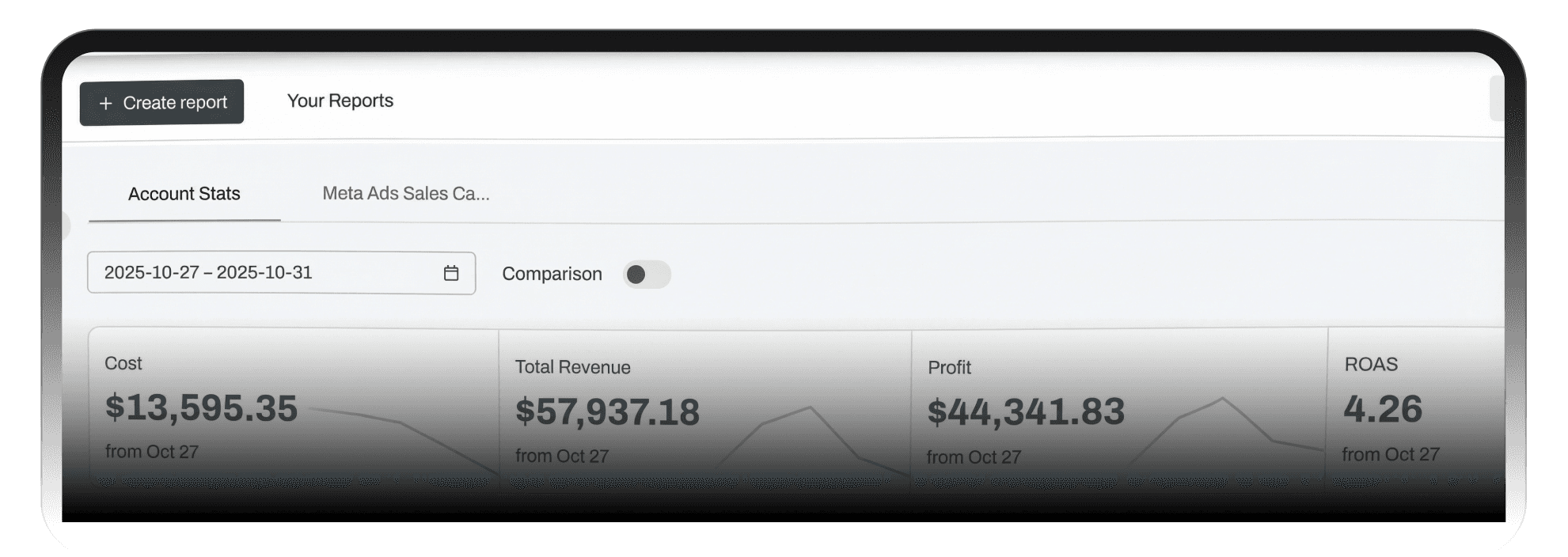
We weren't affected. Actually, scratch that. We benefited. While everyone else scrambled to "adapt," we were already positioned. Because we don't build fragile systems. We build antifragile infrastructure. → Redundant acquisition channels, so one algorithm change doesn't kill us → Behavioral-triggered sequences, so we're not dependent on cold traffic alone → Real attribution data, so we knew exactly where to shift spend while everyone else was guessing While other operators were panicking in public, we were finding new winning patterns. Not better copy. Not better ads. Better systems.
We weren't affected. Actually, scratch that. We benefited. While everyone else scrambled to "adapt," we were already positioned. Because we don't build fragile systems. We build antifragile infrastructure. → Redundant acquisition channels, so one algorithm change doesn't kill us → Behavioral-triggered sequences, so we're not dependent on cold traffic alone → Real attribution data, so we knew exactly where to shift spend while everyone else was guessing While other operators were panicking in public, we were finding new winning patterns. Not better copy. Not better ads. Better systems.
Let me show you something most agencies would never share.
You know what happened in October? Meta's Andromeda update. The one that killed half the info product advertisers overnight. Media buyers were panicking. Accounts tanked. CPAs doubled. Twitter was a support group. Here's what happened with Jordan:
THE ANDROMEDA TEST
THE ANDROMEDA TEST
THE LAYER NOBODY BUILDS
THE LAYER NOBODY BUILDS
CASE STUDY #2
eCommerce Client (NDA) $200K → $1.25M/mo in 90 Days
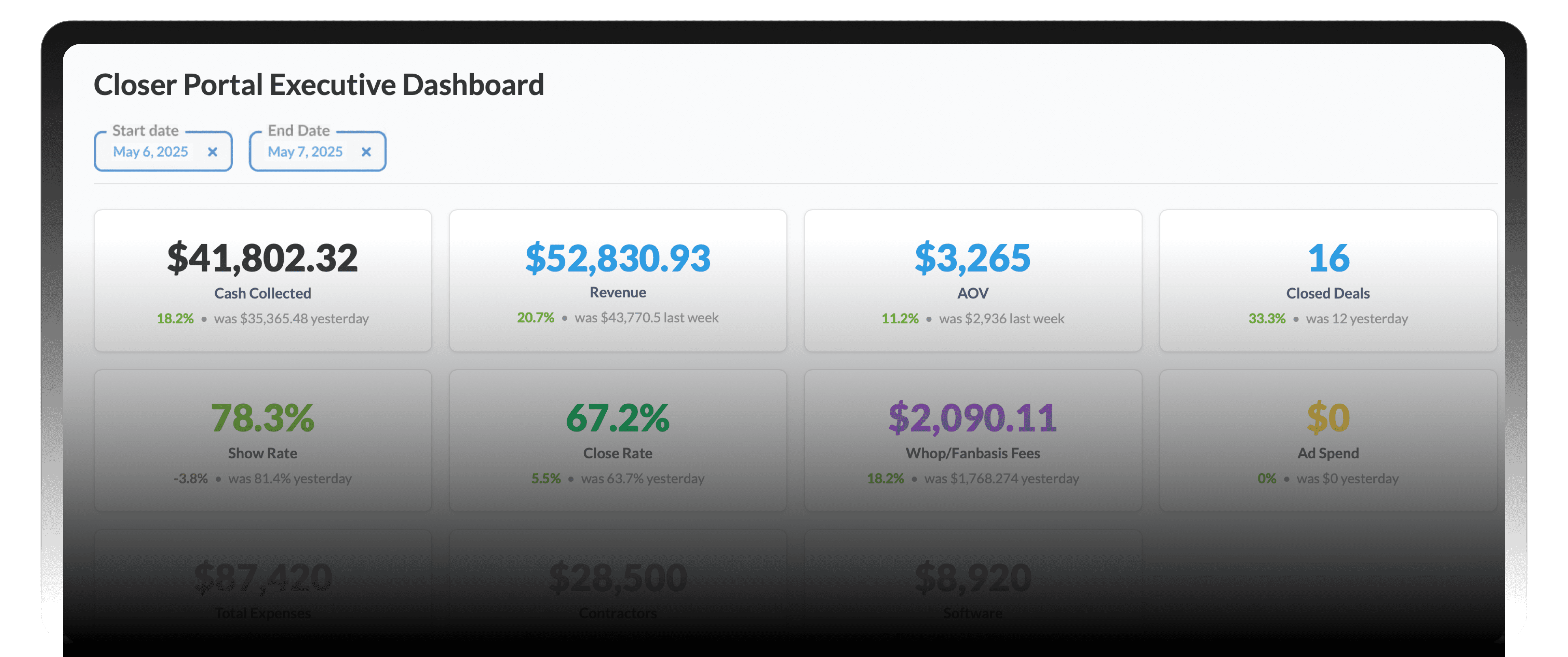

Quick note before this one.
He's under NDA, so I can't name him and the screenshots are redacted where they have to be. Numbers are real. You'll survive.
If you only properly read one case study on this page, make it this one.
HE WAS SELLING THE WRONG THING
When he came to us he was running branded dropshipping. Ecom education, sold the standard way. Nothing wrong with the founder. He's sharp, and he could sell. Everything wrong with the room he was standing in. Because at that exact moment, the supplement and peptide category was going vertical. Not a trend piece somebody wrote. An actual demand wave. Real money moving in every single month, and almost nobody teaching people how to build properly inside it. He was in a room where a hundred people were saying the same thing. There was a room next door where almost nobody was talking. So we moved him.
SO WE MOVED HIM
We rebuilt the entire offer. Done-with-you supplement brand building, A to Z, formulation through launch through scale, aimed at three specific buyer profiles. (Done-with-you. Not done-for-you. We have those packages, we just don't build the business on them.) $200K a month to $1.25M a month. Ninety days. Remember that Schwartz quote from earlier? He never created demand. He found where it already existed and cleared whatever was standing in front of it. That isn't a copywriting principle. That's an offer decision. The market was already handing out money. He was standing in the wrong queue for it.
THEN WE HIT A WALL
$50K days.
Some days we'd touch it. Most days we wouldn't. And the irritating part? Nothing was broken. The offer converted. The backend held. Fulfillment was clean. The acquisition layer just had a ceiling bolted onto it, and no dashboard anywhere was ever going to point at it. Starting to sound familiar? So we ripped that apart too.
CASE STUDY#3
Shohaib Ahmed $10K/mo → $40K/Day in 45 Days
This one's different, and I'll tell you why upfront.
We didn't touch paid. At all. Not one dollar. Even better? Those numbers were hit pre-launch. Shohaib came to us stuck at $10k a month. Frustrated. Genuinely exhausted. And here's the thing that made it worse: he'd already hit multiple $50k months. He just couldn't hold them. Every spike followed by a crash. Revenue like an EKG reading. Every spike gave him hope, every crash took it straight back. Fourteen months of cardiac arrest economics.
→ No predictable acquisition system. Every month was a fresh experiment. Nothing repeatable, so nothing compounded. → Offer positioning changed constantly. Different message every week. Confused audience, fragmented brand. → Backend didn't exist. 80% of revenue coming from front-end sales, no ascension path, money sitting on the table in piles. Classic hustler's trap. Working harder every month to stay in exactly the same place. His 80/20 was inverted. He was spending 80% of his effort on the 20% that never compounds.
→ Changed the targeting → Rebuilt the offer from scratch → Fired the entire team (yes, really, all of them) → Brought in new fulfillment, sales, funnel and content teams Then: single stable offer architecture. One clear message. One clear path. A predictable acquisition system. An organic content machine that compounds instead of spiking. And a backend sequence that turns buyers into repeat customers without anybody touching it.
SO WE REBUILT THE WHOLE CHASSIS
SO WE REBUILT THE WHOLE CHASSIS
WHY IT KEPT CRASHING
WHY IT KEPT CRASHING
45 DAYS LATER'
45 DAYS LATER'

$40k/day.
From $10k months. Inside 45 days of signing, and again, zero paid. That's not optimization. That's what happens when the architecture underneath changes.
WHAT WE FOUND WHEN WE LOOKED PROPERLY
Three failures. The same three we find in nearly every stalled ecom offer at this level, so read these ones properly. One. They were selling to everybody. "Anyone who wants to launch a supplement brand." That was the ICP. That's not an ICP. That's a category. When we mapped the actual buyer data, three completely different people fell out of it. Hybrid athletes turning training knowledge into a clinically-dosed brand. Executives who train and want a premium line that matches their standards. Cycle-aware women who lift and want to build around phase-specific dosing. Three buyers. Three fears. Three price triggers. One funnel talking to all of them. Landing with none of them. Two. One door. One landing page. One message. One path. An athlete tracking HRV and a woman tracking her luteal phase were reading identical copy. The funnel couldn't convert what it couldn't speak to. **Three. The pixel was being poisoned.** Every booked call fired the same event. Qualified, unqualified, didn't matter. Sound familiar? It should. I described your version of this a few screens ago and told you I'd put money on it.
SO WE BUILT IT WITH TWO EXITS
Most funnels have one exit. You qualify, or you're gone. We built this one with two. The ad promises a diagnosis, not an outcome. Then a quiz. 7 to 11 questions. It routes people by segment, captures nothing yet, and disqualifies nobody. Then the results gate. Name, email, phone, behind a "get your results" frame. That phone number is the only reason SMS runs in eight of our nine recovery lanes. Most valuable field on the page and almost nobody thinks about it. Then a segmented VSL. Three to five variants, angle-matched to whatever the quiz just learned. The apply button doesn't appear until minute 8 to 12. Deliberately. Early clicks come from people who haven't consumed the proof yet, and all they do is stuff the application full of rejects. Then the application. The only place in this entire funnel where anybody gets qualified. Money and capacity questions live here and nowhere else. Ask them at the quiz and you kill completion, lose the phone number, and break every recovery lane sitting behind it. Then it splits. Qualified → booking page → confirmation → call → close. Disqualified → an offer ladder built by segment and by rejection reason. $27 entry with order bumps, then a mid-ticket, then a high-ticket re-pitch, then the dialer. One funnel. Two ways out. Nobody walks off with your money still in their pocket.
AND NINE WAYS BACK IN
Underneath all of it, nine recovery lanes. Email and SMS, every one behaviour-triggered. Quiz started, never finished. Opted in, never watched the VSL. Watched, never clicked apply. Started the application, never sent it. Qualified, never booked. Disqualified, never bought the entry offer. Bought the entry offer but no mid-ticket. Took the mid-ticket but no high-ticket, which is where the dialer picks it up. Booked, then no-showed or didn't close. Nine of them. Because people don't leave a funnel once. They leave it in nine different places.
THE ONE RULE THAT HOLDS IT TOGETHER
Everything above is architecture. This next bit is the reason it works, and it's one sentence long. **The Schedule event fires on a qualified booking confirm. Nothing else.** The disqualification branch never fires a high-value event to Meta. Not once. Not at any rung of that ladder, no matter how much money that ladder makes. So the pixel only ever learns from qualified schedules. Which is why cost per qualified booked call sits at **$203**, instead of drifting up toward $400 while the algorithm goes hunting for more people who look like they'll get rejected. Remember the signal integrity thing I walked you through a few screens up? The one I said you're probably living right now? That's what the fix looks like when somebody actually builds it.
NOW GUESS WHAT THE LADDER WAS WORTH

March 22nd. $91,734 in a single day, on $15,602 of ad spend.
Before I break it down, guess what the disqualified branch contributed. The people who applied and got told no. Nothing? Few hundred? Couple grand if you're feeling generous? Here's the day. Qualified branch · $54,233 · 3.48x 77 qualified schedules at $203 each. 72% showed up. 28.3% closed, at a $3,463 average order. Ladder branch · $17,688 · on zero additional ad spend Paid total · $71,922 · 4.61x

Organic stacked another $19,812 on top. Cash collected landed at $73,782, just over 80% of revenue on the day.
$17,688. From the people we said no to.
WHY THAT NUMBER MATTERS MORE THAN THE $91K
Strip the ladder out of this funnel and it's a 3.48x machine. Good. Unremarkable. Plenty of agencies would put a 3.48x on a slide and call it a case study. The branch that monetizes rejected applicants is the thing carrying it past 4.5x. And it did that without a dollar of extra spend, because those people were already bought and paid for by the time the application told them no. Run the per-schedule math and it gets louder. $706 of call-branch revenue per qualified schedule. Plus $230 from the ladder. **$936 blended, against $203 to acquire it.** $733 of contribution. Per schedule. Model on $706 instead of $936 and you undercount your own funnel by a third, then cap your spend below what your economics can actually carry. (Which, by the way, is almost exactly the mistake I told you your own numbers are probably making.) A standard call funnel has one exit. You qualify or you're gone, and every dollar spent acquiring somebody who doesn't qualify is burned. Nobody who walks into this funnel is wasted. That's the whole advantage. It was never the quiz.
AND THE LATEST

July. A $128K day, at 4.3x.
Same architecture. Four months later. The $91K day wasn't a spike, and neither is this one. That's the entire point of building infrastructure instead of chasing tactics. $50K days went from being the ceiling to being the floor. We run them consistently now.
So here's the question you should be asking.
"What's MY infrastructure blindspot?"
Because you've got one. Every offer between $80K and $250K a month does.
It isn't your ads. It isn't your copy. It isn't even your offer. It's the invisible architecture sitting underneath all three of them.
Most founders are busy testing headline A against headline B while three different buyers hit the same page and everyone who doesn't qualify walks out the door with the money still in their pocket.
That's exactly what we diagnose on your call. Not theory. Not assumptions. Your actual constraint, in your actual numbers.
CASE STUDY #3
Closer Portal $10K/mo → $20K-$40K/Day in 45 Days
Quick note before this one.
He's under NDA, so I can't name him and the screenshots are redacted where they have to be. Numbers are real. You'll survive.
If you only properly read one case study on this page, make it this one.
This one's different, and I'll tell you why upfront.
We didn't touch paid. At all. Not one dollar. Even better? Those numbers were hit pre-launch. Shohaib came to us stuck at $10k a month. Frustrated. Genuinely exhausted. And here's the thing that made it worse: he'd already hit multiple $50k months. He just couldn't hold them. Every spike followed by a crash. Revenue like an EKG reading. Every spike gave him hope, every crash took it straight back. Fourteen months of cardiac arrest economics. Even better? Those numbers were hit pre-launch. Shohaib came to us stuck at $10k/month. Islamic offer. Frustrated. Exhausted. He'd hit multiple $50k+ months before—but couldn't maintain them. Every spike followed by a crash. Revenue like an EKG reading. Every spike gave him hope. Every crash took it back. Fourteen months of cardiac arrest economics.
WHY IT KEPT CRASHING
HE WAS SELLING THE WRONG THING
HE WAS SELLING THE WRONG THING
THEN WE HIT A WALL
THEN WE HIT A WALL
→ No predictable acquisition system. Every month was a fresh experiment. Nothing repeatable, so nothing compounded. → Offer positioning changed constantly. Different message every week. Confused audience, fragmented brand. → Backend didn't exist. 80% of revenue coming from front-end sales, no ascension path, money sitting on the table in piles. Classic hustler's trap. Working harder every month to stay in exactly the same place. His 80/20 was inverted. He was spending 80% of his effort on the 20% that never compounds.
CASE STUDY#2
eCommerce Client (NDA)
$200K → $1.25M/mo in 90 Days
When he came to us he was running branded dropshipping. Ecom education, sold the standard way. Nothing wrong with the operator. He's sharp, and he could sell. Everything wrong with the room he was standing in. Because at that exact moment, the supplement and peptide category was going vertical. Not a trend piece somebody wrote. An actual demand wave. Real money moving in every single month, and almost nobody teaching people how to build properly inside it. He was in a room where a hundred people were saying the same thing. There was a room next door where almost nobody was talking. So we moved him.
We rebuilt the entire offer. Done-with-you supplement brand building, A to Z, formulation through launch through scale, aimed at three specific buyer profiles. (Done-with-you. Not done-for-you. We have those packages, we just don't build the business on them.) $200K a month to $1.25M a month. Ninety days. Remember that Schwartz quote from earlier? He never created demand. He found where it already existed and cleared whatever was standing in front of it. That isn't a copywriting principle. That's an offer decision. The market was already handing out money. He was standing in the wrong queue for it.
WHAT WE FOUND WHEN WE LOOKED PROPERLY
WHAT WE FOUND WHEN WE LOOKED PROPERLY
$50K days.
Some days we'd touch it. Most days we wouldn't. And the irritating part? Nothing was broken. The offer converted. The backend held. Fulfillment was clean. The acquisition layer just had a ceiling bolted onto it, and no dashboard anywhere was ever going to point at it. Starting to sound familiar? So we ripped that apart too.
AND NINE WAYS BACK IN
AND NINE WAYS BACK IN
SO WE BUILT IT WITH TWO EXITS
SO WE BUILT IT WITH TWO EXITS
Three failures. The same three we find in nearly every stalled ecom offer at this level, so read these ones properly. **One. They were selling to everybody.** "Anyone who wants to launch a supplement brand." That was the ICP. That's not an ICP. That's a category. When we mapped the actual buyer data, three completely different people fell out of it. Hybrid athletes turning training knowledge into a clinically-dosed brand. Executives who train and want a premium line that matches their standards. Cycle-aware women who lift and want to build around phase-specific dosing. Three buyers. Three fears. Three price triggers. One funnel talking to all of them. Landing with none of them. **Two. One door.** One landing page. One message. One path. An athlete tracking HRV and a woman tracking her luteal phase were reading identical copy. The funnel couldn't convert what it couldn't speak to. **Three. The pixel was being poisoned.** Every booked call fired the same event. Qualified, unqualified, didn't matter. Sound familiar? It should. I described your version of this a few screens ago and told you I'd put money on it.
Most funnels have one exit. You qualify, or you're gone. We built this one with two. The ad promises a diagnosis, not an outcome. Then a quiz. 7 to 11 questions. It routes people by segment, captures nothing yet, and disqualifies nobody. Then the results gate. Name, email, phone, behind a "get your results" frame. That phone number is the only reason SMS runs in eight of our nine recovery lanes. Most valuable field on the page and almost nobody thinks about it. Then a segmented VSL. Three to five variants, angle-matched to whatever the quiz just learned. The apply button doesn't appear until minute 8 to 12. Deliberately. Early clicks come from people who haven't consumed the proof yet, and all they do is stuff the application full of rejects. Then the application. The only place in this entire funnel where anybody gets qualified. Money and capacity questions live here and nowhere else. Ask them at the quiz and you kill completion, lose the phone number, and break every recovery lane sitting behind it. Then it splits. Qualified → booking page → confirmation → call → close. Disqualified → an offer ladder built by segment and by rejection reason. $27 entry with order bumps, then a mid-ticket, then a high-ticket re-pitch, then the dialer. One funnel. Two ways out. Nobody walks off with your money still in their pocket.
Underneath all of it, nine recovery lanes. Email and SMS, every one behaviour-triggered. Quiz started, never finished. Opted in, never watched the VSL. Watched, never clicked apply. Started the application, never sent it. Qualified, never booked. Disqualified, never bought the entry offer. Bought the entry offer but no mid-ticket. Took the mid-ticket but no high-ticket, which is where the dialer picks it up. Booked, then no-showed or didn't close. Nine of them. Because people don't leave a funnel once. They leave it in nine different places.
Everything above is architecture. This next bit is the reason it works, and it's one sentence long. **The Schedule event fires on a qualified booking confirm. Nothing else.** The disqualification branch never fires a high-value event to Meta. Not once. Not at any rung of that ladder, no matter how much money that ladder makes. So the pixel only ever learns from qualified schedules. Which is why cost per qualified booked call sits at **$203**, instead of drifting up toward $400 while the algorithm goes hunting for more people who look like they'll get rejected. Remember the signal integrity thing I walked you through a few screens up? The one I said you're probably living right now? That's what the fix looks like when somebody actually builds it.
THE ONE RULE THAT HOLDS IT TOGETHER
THE ONE RULE THAT HOLDS IT TOGETHER
SO WE MOVED HIM
SO WE MOVED HIM
AND THE LATEST
AND THE LATEST
NOW GUESS WHAT THE LADDER WAS WORTH
NOW GUESS WHAT THE LADDER WAS WORTH
WHY THAT NUMBER MATTERS MORE THAN THE $91K
WHY THAT NUMBER MATTERS MORE THAN THE $91K
March 22nd. $91,734 in a single day, on $15,602 of ad spend.
Before I break it down, guess what the disqualified branch contributed. The people who applied and got told no. Nothing? Few hundred? Couple grand if you're feeling generous? Here's the day. Qualified branch · $54,233 · 3.48x 77 qualified schedules at $203 each. 72% showed up. 28.3% closed, at a $3,463 average order. Ladder branch · $17,688 · on zero additional ad spend Paid total · $71,922 · 4.61x
Strip the ladder out of this funnel and it's a 3.48x machine. Good. Unremarkable. Plenty of agencies would put a 3.48x on a slide and call it a case study. The branch that monetizes rejected applicants is the thing carrying it past 4.5x. And it did that without a dollar of extra spend, because those people were already bought and paid for by the time the application told them no. Run the per-schedule math and it gets louder. $706 of call-branch revenue per qualified schedule. Plus $230 from the ladder. **$936 blended, against $203 to acquire it.** $733 of contribution. Per schedule. Model on $706 instead of $936 and you undercount your own funnel by a third, then cap your spend below what your economics can actually carry. (Which, by the way, is almost exactly the mistake I told you your own numbers are probably making.) A standard call funnel has one exit. You qualify or you're gone, and every dollar spent acquiring somebody who doesn't qualify is burned. Nobody who walks into this funnel is wasted. That's the whole advantage. It was never the quiz.
SO WE REBUILT THE WHOLE CHASSIS
→ Changed the targeting → Rebuilt the offer from scratch → Fired the entire team (yes, really, all of them) → Brought in new fulfillment, sales, funnel and content teams Then: single stable offer architecture. One clear message. One clear path. A predictable acquisition system. An organic content machine that compounds instead of spiking. And a backend sequence that turns buyers into repeat customers without anybody touching it.
45 DAYS LATER
$40k days.
From $10k months. Inside 45 days of signing, and again, zero paid. That's not optimization. That's what happens when the architecture underneath changes.
July. A $128K day, at 4.3x.
Same architecture. Four months later. The $91K day wasn't a spike, and neither is this one. That's the entire point of building infrastructure instead of chasing tactics. $50K days went from being the ceiling to being the floor. We run them consistently now.
Organic stacked another $19,812 on top. Cash collected landed at $73,782, just over 80% of revenue on the day.
$17,688. From the people we said no to.
So here's the question you should be asking.
"What's MY infrastructure blindspot?"
Because you've got one. Every offer between $80K and $250K a month does.
It isn't your ads. It isn't your copy. It isn't even your offer. It's the invisible architecture sitting underneath all three of them.
Most founders are busy testing headline A against headline B while three different buyers hit the same page and everyone who doesn't qualify walks out the door with the money still in their pocket.
That's exactly what we diagnose on your call. Not theory. Not assumptions. Your actual constraint, in your actual numbers.
Awaits You
(Two Private Videos You Won't Find Anywhere Else)
Before we talk, watch these two videos. They'll make our 30 minutes 10x more valuable.
AWAITS YOU
AWAITS YOU
(Two Private Videos You Won't Find Anywhere Else)
Before we talk, watch these two videos. They'll make our 30 minutes 10x more valuable.

Masterclass #1
I Scaled 2 Founders to 1M/mo in 60 Days
Here's the ONE Belief They Both Had to Unf*ck
The single operating belief quietly running your business, and why it mathematically guarantees a ceiling. Watch before our call.
Masterclass #2
This VSL Made Jordan $1M in 60 Days
Here's How You Can Steal It
The 40 hours of invisible infrastructure built before a single word was typed — and why skipping this is why most VSLs quietly bleed money.

Masterclass #2
This VSL Made Jordan $1M in 60 Days
Here's How You Can Steal It
The 40 hours of invisible infrastructure built before a single word was typed — and why skipping this is why most VSLs quietly bleed money.
A Final Thought
Gary Halbert—one of the greatest direct response copywriters in history—said something that changed how I think about business:
Gary Halbert—one of the greatest direct response copywriters in history—said something that changed how I think about business:
Motion beats meditation.
Motion beats meditation.
You've already taken motion by booking this call.
Now, the question is: what happens next?
That means you've already admitted something most founders never will:
What got you here isn't getting you to $1M.
That admission costs something. Ego. Comfort. The story you've been telling yourself about why you're stuck.
Now you have a choice.
You can watch the videos, and show up ready to rebuild.
Or you can treat this like every other "strategy call" you've booked—show up half-present, nod along, then go back to optimizing the same broken systems.
One path leads to $1M months.
The other leads to the same $200k ceiling you've been staring at for the past 12 months.
I can't make that choice for you.
But I can tell you this: every founder we've scaled to $1M+ made the same decision you're about to make.
They showed up ready to kill what wasn't working.
Will you?
See you on the call, Ciao.
— Kareem
Your Future Partner

P.S. — If you need to reschedule, do it 24 hours out. We only work with founders who treat their commitments like contracts — because the ones who don't never scale anyway. That's not a threat. It's just what we've observed.
A Final Thought
You've already taken motion by booking this call.
Now, the question is: what happens next?
That means you've already admitted something most founders never will:
What got you here isn't getting you to $1M.
That admission costs something. Ego. Comfort. The story you've been telling yourself about why you're stuck.
Now you have a choice.
You can watch the videos, and show up ready to rebuild.
Or you can treat this like every other "strategy call" you've booked—show up half-present, nod along, then go back to optimizing the same broken systems.
One path leads to $1M months.
The other leads to the same $200k ceiling you've been staring at for the past 12 months.
I can't make that choice for you.
But I can tell you this: every founder we've scaled to $1M+ made the same decision you're about to make.
They showed up ready to kill what wasn't working.
Will you?
See you on the call, Ciao.
— Kareem
Your Future Partner
P.S. — If you need to reschedule, do it 24 hours out. We only work with founders who treat their commitments like contracts — because the ones who don't never scale anyway. That's not a threat. It's just what we've observed.
FAQ's
FAQ's
Is this a sales call?
It's a filter. Most founders who book aren't ready for what we do. We'll tell you that in the first 10 minutes and give you a roadmap anyway. We're not looking for clients. We're looking for partners, looking for the rare founder who sees the pattern on this page and recognizes their own ceiling. If that's you, we talk next steps. If it's not, you leave with clarity you didn't have before. Either way, you win.
What happens on the call?
We already ran your form inputs through our diagnostic. On the call I'll show you exactly where your infrastructure is leaking and what your numbers look like at target. If there's a fit, we talk next steps. If not, you leave with the diagnosis. Either way you walk out knowing your number.
I've been burned by agencies before.
Good. That means you've already learned what doesn't work: retainer fees for "strategy decks," junior media buyers running your account, monthly reports that explain why nothing moved. We're not an agency. We're revenue-share partners. We eat only when you eat. That's not a pricing model. That's alignment. The agencies who burned you were playing a different game. They got paid whether you grew or not. We don't.
How is this different from other "growth partners"?
Most "partners" are agencies with better branding. They optimize tactics. We rebuild infrastructure. They think in campaigns. We think in systems. You've seen the case studies. Jordan. The NDA client. Shohaib. Same pattern. Same mechanism. Same results. Find another partner with that track record. We'll wait.
What's the investment?
We'll discuss that on the call—but only if it makes sense. We're not trying to sell you something you don't need. We're trying to find the right partners for the results we know we can deliver.
Is this a sales call?
What happens on the call?
We already ran your form inputs through our diagnostic. On the call I'll show you exactly where your infrastructure is leaking and what your numbers look like at target. If there's a fit, we talk next steps. If not, you leave with the diagnosis. Either way you walk out knowing your number.
I've been burned by agencies before.
Good. That means you've already learned what doesn't work: retainer fees for "strategy decks," junior media buyers running your account, monthly reports that explain why nothing moved. We're not an agency. We're revenue-share partners. We eat only when you eat. That's not a pricing model. That's alignment. The agencies who burned you were playing a different game. They got paid whether you grew or not. We don't.
How is this different from other "growth partners"?
Most "partners" are agencies with better branding. They optimize tactics. We rebuild infrastructure. They think in campaigns. We think in systems. You've seen the case studies. Jordan. The NDA client. Shohaib. Same pattern. Same mechanism. Same results. Find another partner with that track record. We'll wait.
What's the investment?
We'll discuss that on the call—but only if it makes sense. We're not trying to sell you something you don't need. We're trying to find the right partners for the results we know we can deliver.